Groom Style
Sherwani vs Prince Coat: What Should a Pakistani Groom Wear?

Choose a sherwani for the main ceremony when you want a long, formal silhouette with unmistakable groom presence. Choose a prince coat for a Walima, reception, engagement or modern Nikah when you want a shorter, sharper line and more ways to wear the piece again. If you are buying one outfit for a traditional Barat and cannot decide, the sherwani is the safer choice.
The names can overlap between designers, so judge the garment in front of you. Look at its hem, structure and complete styling rather than relying on the label alone.
Side by side
Sherwani vs prince coat at a glance
| Decision point | Sherwani | Prince coat |
|---|---|---|
| Length and cut | Long, structured coat, usually to the knee or below | Usually shorter, closer to a tailored jacket and fitted through the waist |
| Visual character | Traditional and ceremonial | Polished, tailored and contemporary |
| Best event | Barat or a highly traditional Nikah | Walima, reception, engagement or an intimate Nikah |
| Lower garment | Churidar, pyjama or straight trousers | Kurta pyjama, straight trousers or formal trousers |
| Accessories | Khussa, turban, shawl, brooch or mala | Formal shoes or khussa, with one quieter accessory |
| Movement | Longer hem and dense work can need more management | A shorter, lightly worked version can be easier for mingling |
| Repeat wear | Usually reserved for weddings and major cultural events | Often easier to wear again as a separate coat |
These are practical conventions, not fixed definitions. Some designers use prince coat, prince jacket and bandhgala for overlapping shapes.
Start with silhouette
The real difference is length and visual formality
A sherwani draws a long vertical line from the standing collar towards the knee. That length gives it greater ceremonial weight on a wedding stage and separates the groom from guests in shorter jackets. A prince coat normally ends higher, sits closer through the chest and waist, and reads more like South Asian tailoring in conversation with a formal suit.
Karigur’s groom sherwani guide describes the sherwani as knee-length or below and the prince coat as shorter and closer to a tailored blazer. Sherwani King makes the same distinction in its 2026 comparison. Both are specialist brand sources, so their event advice is useful convention rather than a rule every groom must follow.
Embroidery does not define the category. A sherwani can be almost plain, and a prince coat can carry dense handwork. The cut should still be visible after the surface detail is added.
Choose by function
Which one belongs at each Pakistani wedding event?
Barat
Sherwani
The longer coat gives the groom the strongest ceremonial presence for the main entrance and stage.
Traditional Nikah
Sherwani
Choose a clean, lightly worked version if the ceremony is intimate or held during the day.
Modern or daytime Nikah
Prince coat
A pale prince coat over a tonal kurta pyjama feels formal without carrying the full weight of a Barat look.
Walima or reception
Prince coat
Its tailored line sits comfortably beside suits and evening formalwear and can be easier to move in.
Engagement
Prince coat
A shorter coat creates distinction without using the groom's most ceremonial silhouette too early.
Winter evening
Either
Let the formality decide, then choose velvet, jamawar or structured silk at a weight you can wear comfortably.
Arsalan Iqbal’s official prince coat collection also positions the shorter coat for Walima and reception dressing. If your family or venue has a particular dress tradition, that custom matters more than a general fashion guide.
Choosing specifically for the reception? The Walima groom outfit comparison adds the suit as a third option and weighs all three against venue, climate and repeat wear.
Complete the outfit
How each silhouette changes the rest of the look
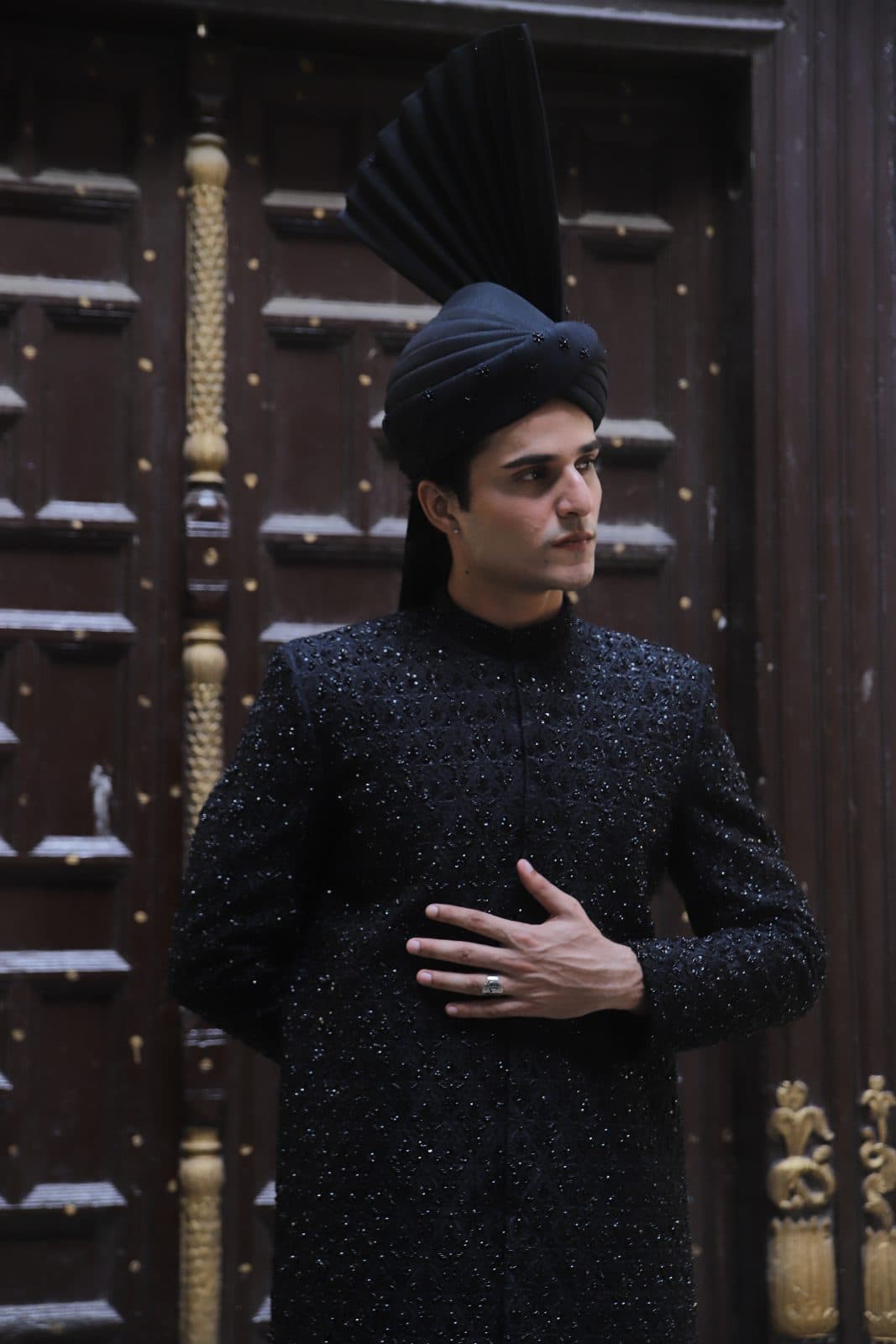
A sherwani can carry a turban, shawl, khussa and mala because its long line already establishes the outfit as ceremonial. That does not mean every accessory must appear together. If the surface is heavily worked, choose one leading accessory and allow the rest to support it.
A prince coat benefits from a cleaner finish. Pair a warm camel or ivory coat with a tonal kurta pyjama for a Nikah, or move towards straight formal trousers and polished shoes for a reception. Arsalan Iqbal’s prince coat sets show both jacket-led and full traditional combinations, which is why the category offers more styling flexibility.
Think beyond one night
Which garment gives you more repeat wear?
A prince coat is usually easier to wear again. The shorter length can be combined with a plain kurta, a different trouser, or a shirt and formal trousers when the design is clean enough. That makes it useful for future weddings, Eid dinners and formal family events.
A sherwani has a narrower but more important role. It is built for the occasions when you want full cultural ceremony. Choose it because it is right for the main event, not because you expect it to become an everyday coat. If value per wear is your leading concern and the event allows either silhouette, the prince coat has the advantage.
This is a practical inference, not a rule. Dense embroidery, fragile cloth or an unusual colour can make any prince coat difficult to restyle. A plain sherwani can sometimes be more versatile than an ornate jacket.
Your answer in six questions
Use this decision check before you order
- 1.Is this outfit for the main Barat entrance?
- 2.Does the setting feel traditional or contemporary?
- 3.Do you want a knee-length ceremonial line or a shorter tailored one?
- 4.Will you be sitting, greeting and dancing for several hours?
- 5.Do you already own the right shoes, lower garment and accessories?
- 6.Will repeat wear meaningfully affect the budget decision?
Mostly traditional, Barat and long silhouette answers point to a sherwani. Mostly reception, tailored and repeat-wear answers point to a prince coat. If you choose the sherwani, review the five mistakes to avoid before fitting.
Quick answers
Common questions about sherwanis and prince coats
Is a prince coat the same as a sherwani?
Usually not. A prince coat is normally shorter and more fitted, while a sherwani generally reaches the knee or below. Product names vary, so compare the actual cut.
Can a groom wear a prince coat for the Nikah?
Yes. A lightly worked ivory, champagne or muted prince coat over a tonal kurta pyjama is well suited to a daytime or intimate Nikah.
Which is better for a Walima?
A prince coat is often the easier Walima choice because its sharper line works naturally in a reception setting. A clean sherwani remains valid if you prefer a longer silhouette.
Which is more comfortable?
Construction matters more than the name. A shorter, lightly worked prince coat can be easier to move in, but lining, cloth, fit and embroidery weight decide the real comfort.
Try both silhouettes
The mirror settles this decision faster than another saved photograph.
Visit Kudmayi at Gulberg, M.M. Alam Road, Lahore with your event, venue and bridal palette. Compare a sherwani and prince coat side by side before deciding where the wedding budget should go.